Valle d’Itria · Stay
Choosing a masseria in the Valle d’Itria
Working farms first, pools second, and a long table every evening. How to tell the real thing from a hotel with olive trees.

Farm first, hotel second. The order matters.
A masseria was a fortified farm before it was a hotel, and the ones worth driving to still remember that. Olive oil is pressed on the premises, the vegetables come from behind the pool, and dinner is served at one long table because that is how it has always been done. The word has become a brand, though, and it now covers everything from a family farm with four rooms to a resort with a golf course and a helipad. This guide is about telling them apart.
What a masseria actually is
Between the sixteenth and eighteenth centuries, when this coast was raided from the sea and the interior was not much safer, the great landowners of Puglia built their farms to be defended. A masseria is the result: a compound of thick limestone walls around a courtyard, often with a tower, sometimes with a chapel, with the family’s rooms upstairs and the working parts below. The oil press, the cisterns, the stables, the store rooms. Outside the walls, the fields, the olives, the dry-stone enclosures, and the trulli and lamie where the farm workers lived.
They were built to be self-sufficient and many of them still are. What changed in the last thirty years is who sleeps in them.
How the farms became hotels
The transformation began on the coast between Fasano and Savelletri in the 1990s, where a few families restored their masserie into hotels of a kind Puglia had never had: whitewashed, vaulted, quiet, expensive. They set the template that the rest of the region copied, and the copying has not stopped. There are now hundreds of masserie taking guests across the Valle d’Itria, and one very famous resort near Savelletri that was built from nothing in the 2010s to look several hundred years old, and does so with great skill.
None of this is a bad thing. The restoration money has saved buildings that were falling down, and the standard of what you get for the price is, at the good places, remarkable. But the word now needs a question mark after it. A masseria is a building. What happens inside it is up to the owner.
The spectrum: farm, house, resort
At one end is the working farm. The owners live there, they grow things, and the rooms are a way of keeping the land in the family. Breakfast is whatever the trees and the hens produced. Dinner, when there is one, is at a single table with the other guests, and the wine is from down the road. There is a pool, probably, and it may have been a cistern. These are the places this guide is for.
In the middle is the country house: a masseria restored by someone who fell in love with it, run as a small hotel, with more design and less mud. Some of the best places in the valley are here. Whether they farm at all varies, and it is worth asking.
At the other end is the resort. Spa, restaurants plural, a beach club, staff in linen. These are excellent at what they do, and what they do is not the subject of this guide. If what you want is a week by a very good pool with no decisions to make, book one and enjoy it.
The questions to ask before you book
The website will not tell you which kind of place you are looking at. A phone call, or a direct email, will. Ask these:
- Do you farm, and what do you grow? A real answer names trees and animals. A vague one names the view.
- Who cooks, and where does the food come from? The best answer is a person’s name and a description of the garden.
- Is dinner at one table? If yes, you have found a farm. If the answer is a restaurant with a menu, you have found a hotel.
- How far is the nearest town with an evening? A masseria can be lovely and lonely. Fifteen minutes from Cisternino or Martina Franca means you can drink wine in a piazza and be back in bed by midnight.
- Is the pool salt water, and is it heated? May and October nights in the valley drop into single figures. An unheated pool is a decoration until June.
- Is there a wedding while we are there? Many masserie host them. It is a fair question and a good place will answer it honestly.
- What is the minimum stay? Often three nights, often seven in August. Plan around it rather than against it.
Where to look in the Valle d’Itria
The valley is not one place, and the choice of zone matters as much as the choice of house.
The coast, from Fasano to Savelletri. This is where the grand originals are and where the sea is. The land is flat, the olive trees are enormous and old, and the ruins of the Roman town of Egnazia lie among them. Book here for the sea, the spa and the sense of arrival. Expect to pay for it.
The plain below Ostuni. The olive groves here are so old the region has declared them monuments, and the masserie among them are the working oil farms. Dinner under the pergola, a press in the courtyard, the white town on the ridge above. This is the zone for people who came for the food.
The hills, from Cisternino to Martina Franca and Locorotondo. Higher, cooler, greener. Vineyards, trulli, small roads and three of the best evening towns in Puglia within fifteen minutes of each other. The masserie here are smaller and more varied, and the nights are the most comfortable in July.
A few starting points
We would rather describe how to choose than hand you a list, but a few places are useful as points of reference. On the Ostuni plain, a long-established organic olive farm serves a slow dinner from its own land that people drive across the region for. Near it, a small whitewashed masseria built new in old materials by a young architect has become the shorthand for a certain kind of modern Puglian design. On the coast, the original grand restorations near Savelletri are still the benchmark for the resort end of things. And south of the valley, in Manduria’s Primitivo country, a family masseria among the vines shows what the wine side of this looks like.
The long table
Whatever you choose, look for the long table. It is the thing that separates a masseria from a hotel. Dinner at eight, one sitting, everybody together, plates passed hand to hand: fava purée with wild chicory, a bowl of orecchiette, something grilled, a salad from twenty metres away, the farm’s own oil poured over all of it, and a wine you will not find outside the province.
By the second night you will know the other guests’ names. By the third you will know the owner’s dog’s name. That, and not the pool, is what you drove here for.
Before you ask
Questions we get about Ostuni
What does masseria mean?
A fortified farmhouse, usually built between the sixteenth and eighteenth centuries around a courtyard, with the family upstairs, the animals and the oil press below, and walls thick enough to keep out raiders. Many are now places to stay. The best are still farms.
Is a masseria the same as an agriturismo?
Not quite. Agriturismo is a legal category for a working farm that takes guests. A masseria is a type of building. A masseria can be an agriturismo, a boutique hotel, a private house or a resort, and the word on its own tells you nothing about which.
Do masserie have pools?
Most that take guests do, and some have very good ones. Ask whether it is salt water and whether it is heated, because May and October nights in the valley are cool and an unheated pool is for looking at.
Keep reading
Nearby, on the page
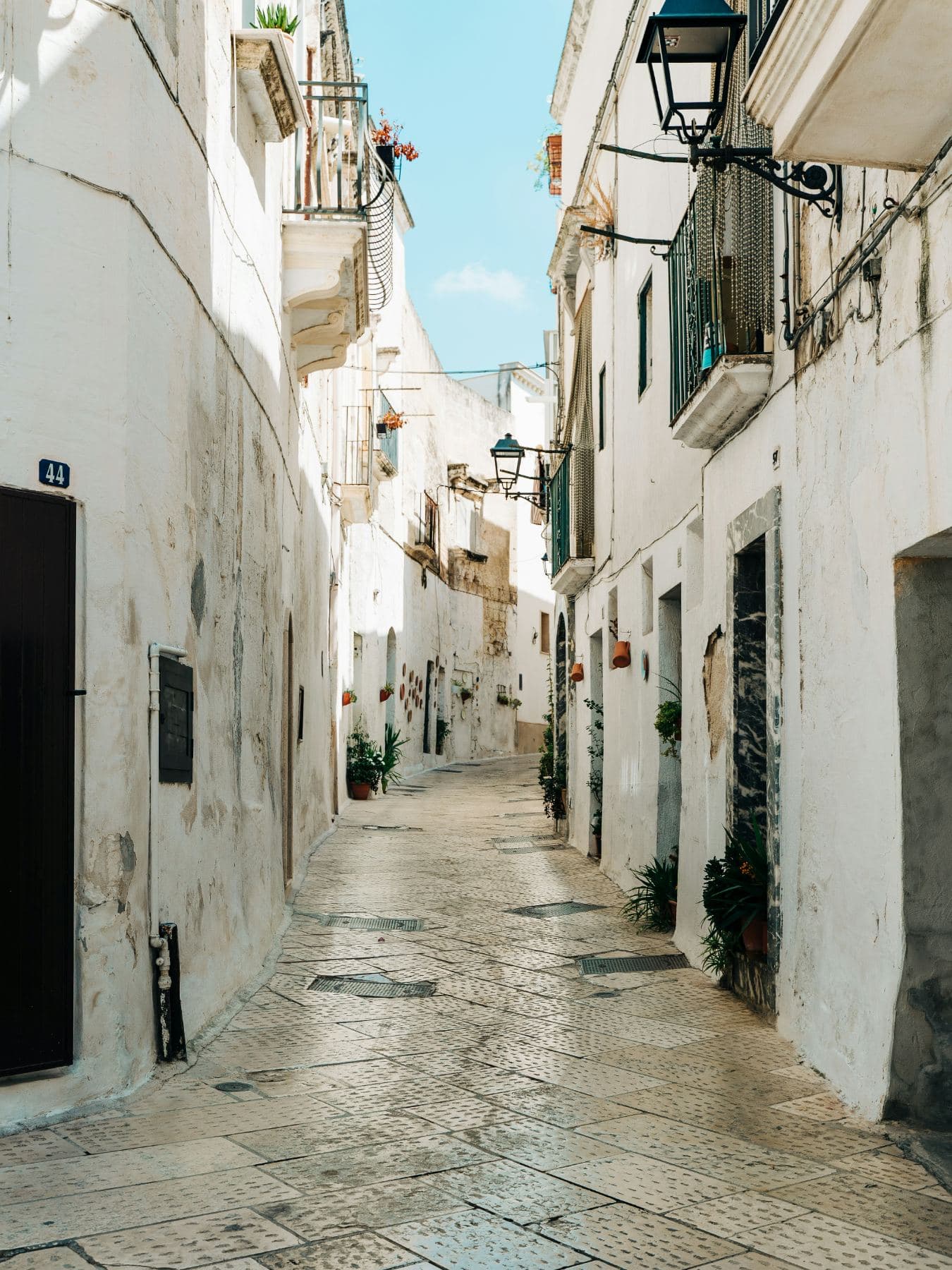
Valle d’Itria · 7 min
The slow road to Ostuni
White walls, hot stone, and where to eat when the churches close at noon.
Read the guide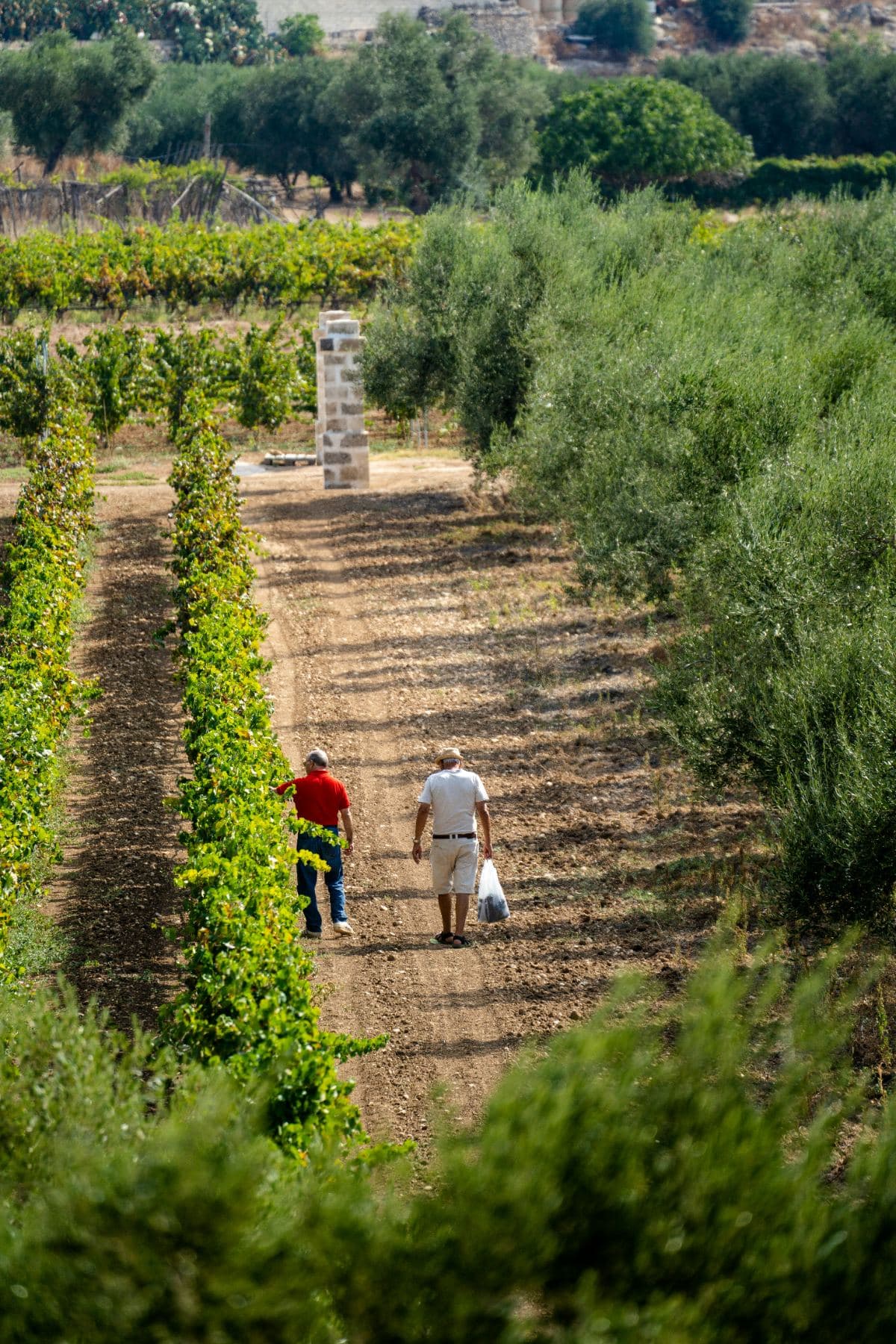
Tavoliere & Murgia · 6 min
Altamura and its bread
A loaf the size of a cushion, a crust you can knock on, and a town that has been baking it since before anyone wrote the recipe down.
Read the guideTavoliere & Murgia · 6 min
Castel del Monte and the high Murgia
An octagonal castle that explains nothing, the sheep plateau around it, and the towns on its edges that feed you.
Read the guide